
Australian construction quoting software
How to quote from a phone call, with permission
Clients describe the job on the phone, then you rebuild it from memory. Quote King can draft lines from an authorised transcript or recording instead.
AI drafts need your review. Pricing comes from your own rate card.
What this does and does not do
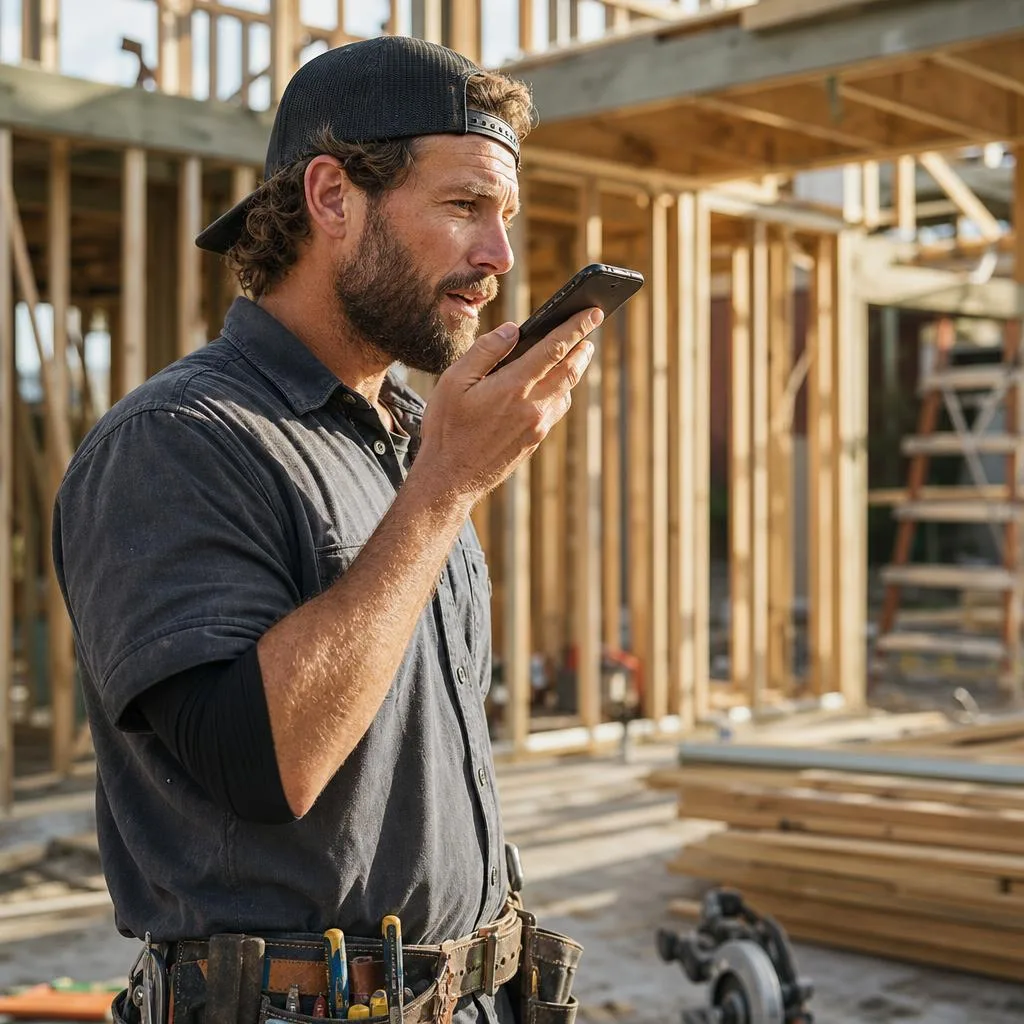
You provide a call transcript or an uploaded recording of a conversation you are authorised to use. Quote King reads it, pulls out the scope and drafts quote lines against your rate card.
It does not automatically intercept phone calls and does not listen in on its own. Nothing is captured unless you supply it.
Permission comes first
Recording a call or conversation requires permission, and the rules differ across Australian states and territories. Ask the other person before recording, and only upload material you are entitled to use. When unsure, take advice.
From transcript to draft
A good call has measurements, locations, materials and exclusions. The more of that is said aloud, the better the draft.
- Confirm key quantities during the call.
- Say what is excluded.
- Note access issues, such as stairs or tight driveways.
Review before it goes anywhere
People misspeak, calls have background noise and transcripts have errors. Check every quantity and price, and set GST and markup. Then send the quote deliberately.
Hypothetical example: a leaking roof call
A homeowner phones a roofer and explains: about 20 square metres of tiles near the chimney are lifting, the ridge capping is cracked in places, and there is staining on the ceiling inside. With permission, the roofer has a transcript.
Quote King drafts lines for re-bedding or replacing tiles, repointing ridge capping and a visit allowance. The roofer knows a phone description is not an inspection, so the quote marks quantities as provisional until the roof is seen, and excludes internal ceiling repairs.
Treat a phone scope as a first draft of the scope
People describe jobs imperfectly on the phone. They guess sizes, forget access problems and mix up what they want with what they need. A quote from a call should say what it assumed, and should usually be confirmed after a site visit or photos.
A useful habit is to read the key points back to the caller during the call: sizes, materials, what is excluded and the timing. That puts the confirmed scope in the transcript, where the draft can use it.
- Confirm measurements and units with the caller.
- State assumptions on the quote itself.
- Mark unverified quantities provisional.
- Follow up with a site visit when the job warrants it.
Compared with taking notes by hand
Hand notes capture what you thought was important at the time. A transcript captures what was actually said, including details you missed. It also needs checking, because transcripts contain errors, so use it as a prompt rather than the final word.
Explore Quote King
Quote the next job with your own rates.
Start on the Free plan and review every line yourself.